The challenge
At off-grid and bad-grid tower sites, energy cost is dominated by diesel — and diesel means generators to maintain, fuel that gets stolen, monthly refuelling visits, and SLA penalties every time a site drops. In many circles the grid is out for 6–12 hours a day.
The traditional fallback, a VRLA battery bank, degrades quickly in hot outdoor shelters and rarely delivers its rated backup for long, so the genset ends up running anyway. Lithium storage changes the economics of the whole site.
Where storage pays off in Telecom (Cell Towers)
Diesel replacement / DG-hybrid
A lithium system rides through outages and, where a genset stays, runs it only to recharge — cutting genset runtime 60–80% and ending fuel pilferage.
Deep bad-grid backup
Deliver true, rated backup through long and frequent cuts, holding the BTS load even in 45 °C-plus shelters where VRLA fades.
Solar / RESCO integration
Pair with a small PV array for near fuel-free remote sites, ideal for RESCO and ESCO operating models.
Headroom for load growth
Carry the extra load of added tenants and 5G radios without re-engineering the power plant.
What a Hanum deployment looks like
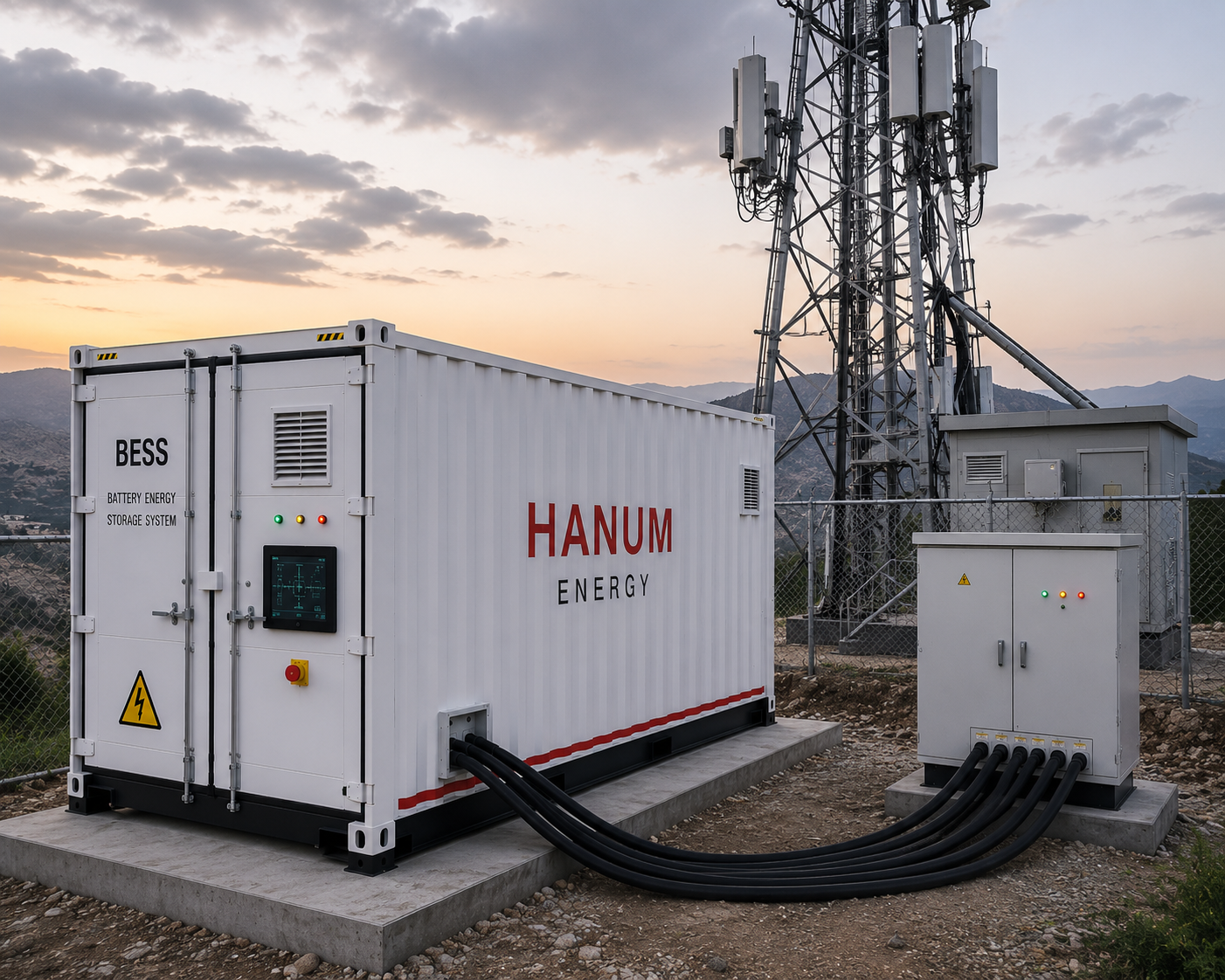
A compact, outdoor-rated cabinet at the BTS replaces the VRLA bank and shrinks or removes the diesel genset. The fleet is monitored remotely from the NOC, so faults and state-of-charge are visible without a site visit.
| Siting | Outdoor BTS cabinet |
| Role | DG replacement / hybrid backup |
| Environment | High-temperature rated |
| Management | Remote NOC monitoring |
Outcomes you can expect
- 60–80% less genset runtime and fuel cost
- Fuel theft eliminated at the site
- Fewer truck-rolls for refuelling and battery swaps
- Higher network uptime and fewer SLA penalties
At a glance
Common questions for Telecom (Cell Towers)
Yes — the cells and pack are rated for high-temperature operation, which is exactly where VRLA banks fail early. Thermal management keeps the cells in band and protects life.
Both models work. Deep-cut sites often keep a small genset that now runs only to top up the battery; better-grid sites can drop the genset entirely. We model your outage profile and recommend the cheaper option.
Yes. Every unit reports state-of-charge, health and alarms to your NOC, so you manage thousands of sites by exception rather than by truck-roll.
Recommended systems
Tower sites use the Cabinet 125, configured for outdoor, high-temperature duty and remote monitoring.
Put storage to work in Telecom (Cell Towers)
Send us your load profile, tariffs and site details and we'll model exactly how a Hanum system performs and pays back for your operation — lease or buy.
Get a free consultation